Playground Softfall Surfaces: What Are Your Options?
When designing a playground, there are many decisions to make but one of the most important is choosing the right safety softfall surface. This is a question we’re asked all the time:
What softfall options are available?
- How much do they cost?
- Are they safe and compliant?
- Are they accessible for all users?
- How do they affect children while they play?
The right softfall surface does more than just meet regulations it plays a major role in how safe, comfortable, and enjoyable the playground is for everyone who uses it.
Why Softfall Matters?
Softfall safety surfaces are designed to absorb impact and help reduce the severity of injuries if a child falls from playground equipment. Falls are the most common cause of playground injuries, so installing an appropriate surface is essential for both safety and compliance.
Choosing the right solution depends on:
- The fall height of the equipment
- The age group using the playground
- The location and climate
- Maintenance requirements
- Budget and long-term durability
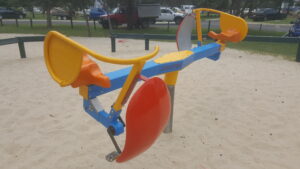
- Below is a breakdown of the most common playground softfall options.
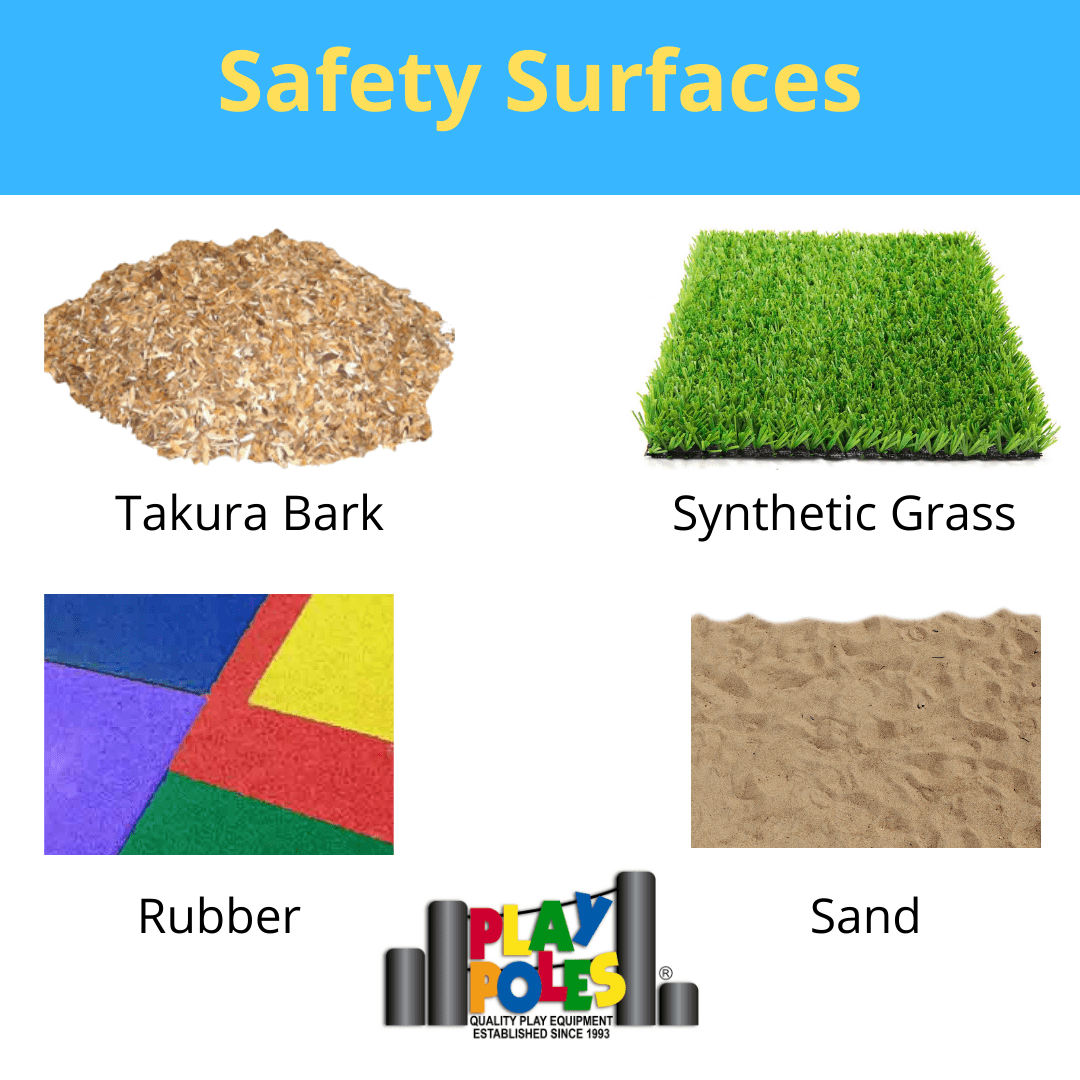
Sand
Sand remains one of the most commonly used softfall surfaces in playgrounds
Benefits:
- Cost-effective and widely available
- Provides natural impact absorption
- Doubles as a play material (sandpits encourage creative play)
- Performs well in hot climates, as it doesn’t degrade under UV exposure
Considerations:
- Can migrate outside the play area
- Requires regular raking and topping up
- Can become messy and may not suit all accessibility needs.
- Sand is often chosen for its affordability and versatility, particularly in larger playgrounds or regional areas.
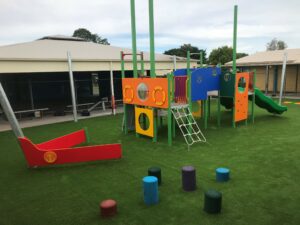
Synthetic Grass (with Shock Pads)
Synthetic grass is a popular choice for both indoor and outdoor playgrounds, especially when combined with rubber shock pads underneath.
Benefits:
- Clean, neat appearance
- Durable and hard-wearing
- All-weather surface
- Shock pads provide added impact protection
- Can be designed to improve accessibility
Considerations:
- Higher upfront cost than loose-fill options
- Requires professional installation to meet fall-height requirements
- When installed correctly, synthetic grass creates a soft, safe environment while maintaining a natural look.
Bark & Takura Bark
Bark is another commonly used loose-fill softfall option and is often preferred over sand due to its feel underfoot.
Natural Bark – Pros & Cons:
- Less messy than sand
- Natural appearance
- Can rot over time
- Lightweight and prone to being washed away in heavy rain
- Requires ongoing replacement and maintenance
- Can have sharp pieces
Takura Bark (Engineered Wood Fibre)
Takura Bark is a manufactured alternative made from non-toxic pine wood (the same material used for paddle pop sticks). 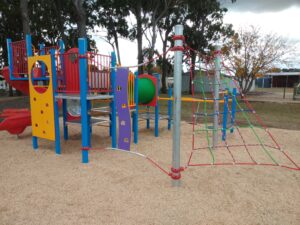
Benefits:
- Minimal dust—ideal for allergy-sensitive environments
- Fade-resistant and long-lasting
- Better consistency and performance than natural bark
- Meets Australian Standard requirements when installed correctly
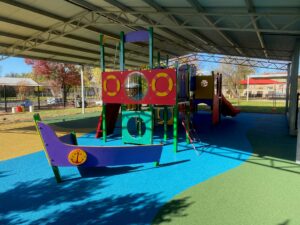
Rubber Softfall
Rubber softfall surfacing has become increasingly popular due to its durability and design flexibility.
Benefits:
- Available in a wide range of colours and patterns
- Non-slip and hard-wearing
- Low maintenance
- Relatively long lifespan
- Highly accessible and suitable for inclusive play
Considerations:
- Higher initial installation cost
- Thickness must vary depending on fall height
For example, a fall height of 1.2 metres requires a minimum rubber thickness of 40mm to comply with Australian Standards. While the u
pfront cost may be higher, rubber softfall often provides the best long-term value.
Safety & Compliance
All softfall safety surfacing and playgrounds we install are designed, manufactured, and installed in accordance with Australian Safety Standards, including:
- AS 4685 (current version) – Playground equipment
- AS 4422:2016 – Playground surfacing – impact attenuation
Compliance ensures the surface performs as intended and provides the required level of protection for children at play.
Need Help Choosing the Right Softfall?
Every playground is different. The best softfall solution depends on how the space will be used, who will use it, and how it will be maintained.
If you’d like expert advice on selecting the right softfall surfacing for your playground, contact us today we’re here to help create safe, engaging, and compliant play spaces.
Sources & References
• Standards Australia – AS 4685 Playground Equipment Series
• Standards Australia – AS 4422:2016 Playground Surfacing – Impact Attenuation
• Kidsafe Australia – Playground safety and injury prevention
• Australian Institute of Health and Welfare (AIHW) – Childhood injury data
